
Silicone, rubber, wood: what teethers are made of

Silicone, rubber, wood: what teethers are made of
Material is the first thing on a teether package and the thing most often skimmed. It determines how the toy feels, how it has to be washed, whether it can be chilled and how long it lasts. Four materials cover almost the whole shelf.
None of them is best in general. They are good at different things, and the right one depends on the stage and on how much cleaning you are prepared to do.
Food-grade silicone
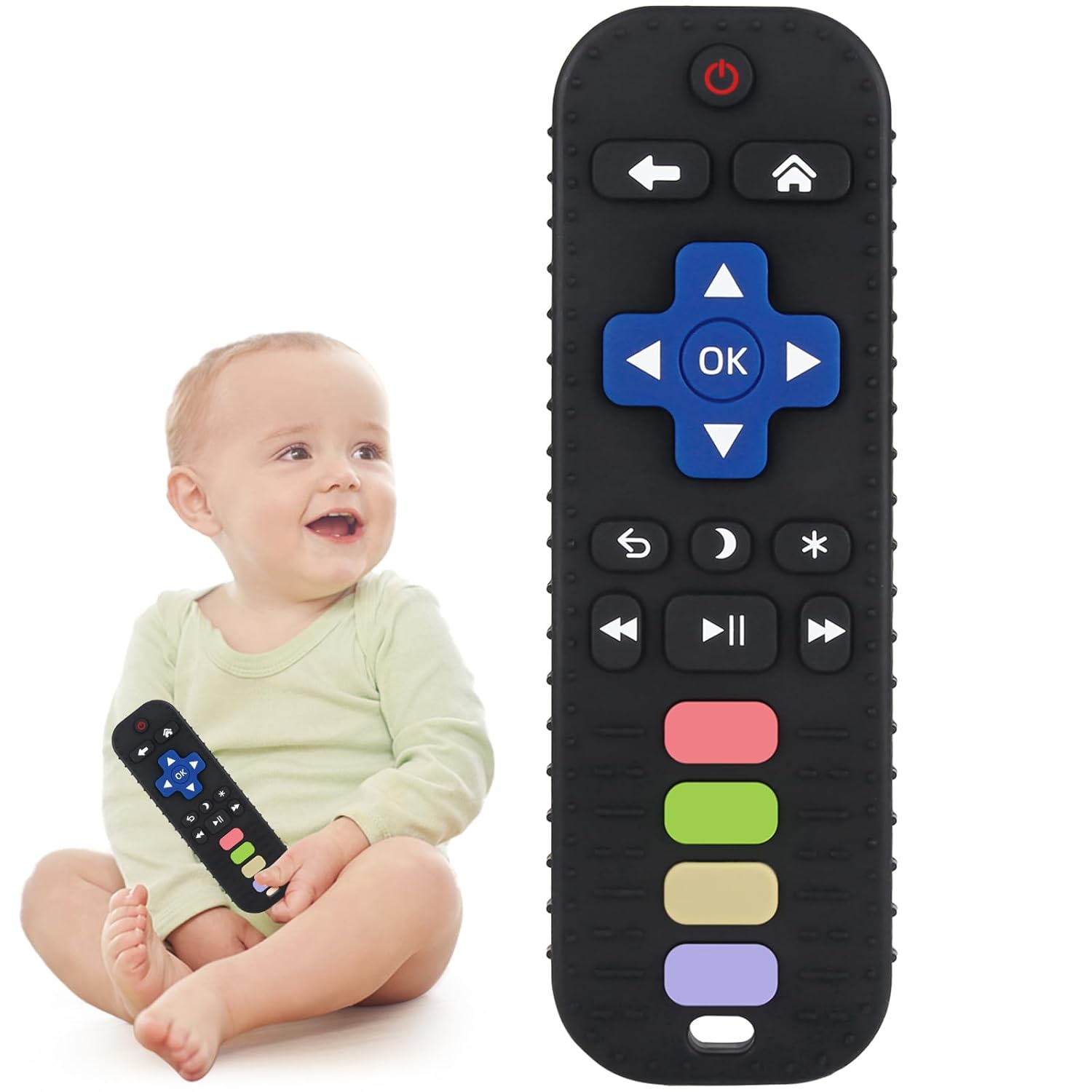
Silicone dominates the category for good reasons: it is flexible without being floppy, it tolerates boiling and dishwashers, it does not absorb odours, and it can be moulded into almost any shape.
It also picks up dust and lint from every surface it touches. That is cosmetic rather than a hygiene problem, and it rinses off, but it is worth knowing before you are surprised by it.
Natural rubber
Natural rubber has a softer, warmer feel than silicone and a give that many babies prefer. Most natural rubber teethers are made in one piece with a small hole from the moulding process, and that hole is the whole story of how they must be cleaned.
Water that gets inside cannot easily get out. These are wipe-clean items: never submerged, never boiled, never put in a dishwasher, and replaced if anything appears inside.
Untreated hardwood
Wooden teethers are firm rather than yielding, which suits some babies and not others. Maple and beech are the usual choices because they are close-grained and do not splinter easily.
Wood is wipe-clean only. Soaking raises the grain and can eventually crack it. A wooden teether should be checked periodically for roughness and retired if the surface has changed.
Fabric and combination designs
Fabric teethers — mittens, soft books with silicone edges, tagged squares — combine a washable textile with a chewable insert. They are the most machine-friendly items on the shelf, which matters when something is being mouthed all day.
The trade-off is drying time and the fact that the chewable part is usually small. As a first teether they are excellent; as a molar-stage item they are not.
What “BPA-free” does and does not tell you
BPA is not used in silicone or natural rubber at all, so “BPA-free” on those materials is accurate and largely beside the point. On hard plastic components it is a meaningful statement.
Where a manufacturer declares food-grade or medical-grade silicone, we repeat that wording exactly. We do not upgrade or paraphrase a material claim, because the specific phrase is the claim.
Cleaning, by material
Silicone: warm soapy water, dishwasher top rack, or boiling for the time the maker states. Natural rubber: damp cloth only. Wood: damp cloth, dried immediately. Fabric: machine wash cool in a bag, air dry fully.
The single most common mistake across all four is not drying properly. Anything still damp in a crevice will develop a smell within a day or two.
How long a teether lasts
Silicone survives heavy use for many months and shows wear as small nicks where teeth have broken the surface — at that point it should be replaced. Rubber softens and can develop tackiness. Wood roughens.
All three are visible on inspection, which is why a thirty-second look before use is worth more than any published lifespan.
Colour, and why some are pale
Uncoloured or lightly coloured silicone makes it much easier to see when something is worn or dirty. Strong colours look better on a shelf and hide exactly the things you want to notice.
Neither is a safety difference in itself; it is purely about what you can see.
Matching material to stage
For a very young baby, soft silicone or fabric. For the incisor stage, silicone or rubber in a narrow shape. For molars, firm silicone or wood with a broad surface. For the chilled stage, whatever the maker says can go in the fridge.
The categories on this site are arranged along roughly those lines, starting with silicone teethers and cooling teethers.
If you are buying one thing
A one-piece silicone teether that the manufacturer permits chilling is the most generally useful item on the shelf and the easiest to keep clean. Everything else is a refinement on top of that.
The full range is on the shop page, our cleaning guide is at cleaning and sterilising teething toys, and returns are covered by the refund and returns policy.
Mixing materials in one rotation
There is no reason to standardise on a single material, and good reasons not to. Babies have preferences that change over weeks, and a rotation containing one soft silicone item, one firmer wooden or textured piece and one fabric item covers far more ground than three variations of the same thing. It also spreads the cleaning load: while the silicone one is boiling, the fabric one is in the machine and the wooden one has already been wiped and put back.
The practical constraint is that each material has a different cleaning routine, and mixing them means remembering which is which. The simplest solution is to keep the wipe-clean items — natural rubber and wood — visually distinct from the boil-safe silicone ones, so nobody in the house has to think about it at half past six in the morning.
Reading a materials claim carefully
Packaging language on this shelf is unusually precise, and it repays reading exactly rather than approximately. “Food-grade silicone” is a specific description. “Silicone” on its own is a broader one. “BPA-free, PVC-free, phthalate-free” is a list of things absent, which tells you nothing about what is present. None of these are dishonest, but they are not interchangeable, and a shop that paraphrases them is quietly changing the claim.
Our rule on the product pages is simple: the material description is whatever the manufacturer prints, quoted rather than summarised. Where they do not state something, the listing is silent about it rather than filling the gap with a reasonable guess. If a detail matters to you and is missing, the counter can read the box.